19 February 2007

the on/off switch?

One of the biggest problems I have with med school is that I've discovered that my brain did not come equipped with an on/off switch. I've been awake now for about 28 hours straight, and I still cannot get it to shut up. It's a tad annoying that way....

I suspect this is not an uncommon problem, especially for those of us in PBL programs, and particularly during the high-pressure days before one of our big exams. On Friday, we have our first PBL exam of the semester. I'd try to correlate this to exams I took as an undergrad, perhaps like those at the end of a term...but really, there's no comparison. The amount of material we're being tested on is absolutely overwhelming. (I think I've said that before, but I don't think I can say it enough, you know?) On Friday, I'll be tested on 36 learning issues and 7 cases. What does that mean? Well, each learning issue is essentially one chapter from a textbook. This block of cases focused on cardiac, vascular, & renal physiology, so we're covering three units in Guyton's Physiology, which means all of cardiac physiology, all of vascular physiology, and all of renal physiology. That would be enough, in and of itself, but, wait, there's more: we've also got chapters from embryology, anatomy, histology, pathology, biochemistry, pharmacology, & genetics. Some of the material will overlap a little--e.g. there's a chapter in phys on lipid metabolism, as well as one in biochem--but basically we've got over 500 pages we're responsible to know. The cases, although much more interesting than just the chapters themselves, integrate much of the material, but they also challenge us in unusual ways. While most medical schools focus on one set of classes at a time (e.g., in a traditional allopathic medical school, I'd be taking lecture courses in physiology, histology, anatomy, embryo, etc, and they'd each be their own distinct entity like in undergrad), almost all of our work is done through the PBL format. It's great in the sense that we're getting clinical exposure early on in the form of learning how a medical case works, what lab results look like, how to interpret x-rays and such, etc; but it's also daunting to have to learn about all the different classes of hypertensive drugs when I feel I've only barely got a grasp on how normal kidney function works, let alone pathophysiology and treatment through pharmacology. And that's just one example of how I feel like I've been thrown in the deep end here, so to speak....

No doubt my experience right now is colored by my surgical recovery and all the time and energy that has eaten up, but I do wonder--is two years enough time to learn all the basic science needed to pass the boards and set foot in a hospital and start treating people? Sometimes it seems like sheer lunacy to me, this concept that I can learn all about the body so quickly.

Of course, it could be the precise reason as to why I seem to have lost my off switch: with this much information to incorporate, even sleep--however infrequently obtained--is permeated with thoughts of drug clearance curves, risk factors for atherosclerosis, and nagging questions about just how those kidney tubules actually work.... Anyone want to trade places for a day? I need a nap!

18 February 2007

let the healing begin...

There's a saying, popular among those in the medical profession, that says that doctors make bad patients. Over the past few weeks, I've gotten a first-hand glimpse of patient life (again) and it hasn't been pretty. I've decided that I make for a rather impatient patient....

Although I haven't hit the big 3-0 just yet (I have a few months left!), I have, in my short time on this planet, managed to lose many of my "spare parts." It all began in my early 20s with a ruptured appendix, followed by the near-loss of a fallopian tube, and then the ubiquitous removal of my wisdom teeth. But, because my body clearly wanted to end the decade in the manner in which it began, last week I lost another part--my gallbladder.

I cannot even begin to describe how mad I was about having to go under the knife again. For those of you who witnessed my appendix debacle (it took 2.5 months to diagnose my ruptured appendix; yes, I should've died, but I didn't), I know I don't need to explain any further, except to note that it happened again: medicine failed me. This may seem like a strange statement coming from a medical student, but one of the reasons I decided to attend medical school is precisely to prevent such mishaps. This time, although my health care providers all pointed in the right place (my gallbladder) based upon my symptoms, the first ultrasound I underwent missed the very obvious fact that I had gallstones. Here's where I begin to have difficulty with the current practice of medicine, particularly in the U.S.: we rely too much on tests and too often ignore our own instincts.

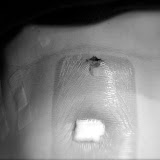
I'm guilty of it myself. When I underwent the first ultrasound, the technician performing the scan wouldn't talk to me. Now, I know, techs are trained not to engage with the patient about what they're seeing. But most are friendly enough to at least TALK to their patients, and many will allow the patient to watch the scan on the screen provided that the patient doesn't ask for an interpretation of what's been shown (since it's the radiologist's [<--aka physician who reads the x-rays or scans, etc.] job to do the interpreting, not the tech's). So I was a tad surprised that this particular tech was so reticent. I recall thinking, "whatever, this person is probably having a bad day." But the scan took a long time. A really long time. And ultrasounds aren't known to be the kind of tests that take more than, oh, twenty minutes or so, max. Again, though, I brushed off my feelings of doubt about the tech's competence and went on my way. Here's a little known fact about medical testing: some tests are only as good as the technician performing them. This is particularly true in cases of diagnostic medical imaging, like ultrasounds. Since the radiologist can only read the images provided to him/her by the technician, the technician's role becomes crucial to the radiologist's ability to make the proper diagnosis. In my case, the scans utterly and totally missed the fact that I had gallstones. Because of this, I entered into a veritable wild goose chase to find a "cure" for my abdominal pain. After countless blood tests, x-rays, CT scans, an upper endoscopy, several trials of medications, and a trip to the ER, I ended up having another ultrasound done in the beginning of January. In this case, the technician proved friendly. He turned the monitor so that I could watch what he was doing and within the first two minutes, before he even said a word, a nice big image of my very sick gallbladder appeared on the screen. It was obvious enough that even I, who have only seen a few ultrasounds throughout my textbooks, lectures, and random experiences thus far as a medical student, knew at once what was evident on the screen. Luckily, my suspicions were confirmed when he began pointing structures out to me (he technically wasn't supposed to talk about what was there, but since I mentioned I was a med student, he gave me a personal tour of my innards that day). So...a diagnosis of gallstones befell me. Unfortunately, gallstones are one of those nasty little problems for which the best cure remains surgical intervention. I spent a good week agonizing over what to do. Had the stones been caught the first time, I could've had surgery over the holiday break and recovered in time to be back at school without having to study while recovering. Alas, no such luck. So, I had to make a decision as to how to proceed with my health care while simultaneously managing my second semester of medical school. *Not* an easy decision to make, let me tell you.... With gallstones, it isn't so much the pain that they cause that is the biggest medical concern, although anyone who has experienced an attack of gallstones will tell you that the pain is not trivial. Rather, because of where they're located in the gallbladder, the stones can pass out of the gallbladder and into the duct that goes from the gallbladder to the intestines. Unfortunately, part of this duct is shared with the pancreas--the organ responsible for, among other things, providing us with some really important and potent digestive enzymes. If a gallstone blocks the duct, the enzymes can back up in the pancreas and cause it to start eating itself. <--this is not a good thing (read: death in about 24 hours). The pancreas is not on the list of spare parts. Since it became clear that I'd already passed a gallstone (my liver enzymes had been elevated and I'd gone to the ER in extreme pain), my case was one that my PCP aptly described as "not a matter of 'if,' but a matter of 'when'" the next stone would block the duct. So, I decided to have surgery, in the form of my third laparoscopy. All said and done, the procedure went well. I gave the surgeon a bit of a challenge with some unusual arterial structure (one artery formed in a W shape instead of the usual Y configuration), but otherwise mine was a standard operation. The after-effects have not been as easy. I had the very unpleasant experience of having my bladder seize up post-op--a not altogether uncommon response that some people have to surgery such that they cannot pee afterward and have to be catheterized. OUCH. I also have managed to develop an allergic reaction to the adhesive in the bandages; as I write this, I'm doing my best not to scratch my belly, but it isn't easy! All this aside, however, I must say that recovery from this surgery is a whole lot less painful than recovering from an appendectomy. For this, and the fact that the whole ordeal is over, I am extremely grateful. For you voyeurs who like the nitty-gritty, seldom-shared details, here's a closeup of the aftermath:


Now, I have to go figure out how to learn all of cardiac and renal physiology in time to pass my PBL exam on Friday; a task which, ironically, feels a lot more scary than undergoing surgery! My revised favorite expression for the experience of medical school: this too shall pass, like a GALLSTONE! ;-)


06 February 2007

Is a "Well-Rounded Physician" an Oxymoron?

Is a "Well-Rounded Physician" an Oxymoron?
An apt way of saying what I couldn't have said better myself....

27 January 2007

White Coat

Today marked a new beginning as my classmates and I were officially inducted into medicine via the White Coat Ceremony. It was a beautiful, celebratory event (a rare occurrence, that, in medical school, I find...), and yet I'm left with the feeling that I've crossed some great divide and am now in no-man's-land, so to speak.

I suppose that this isn't really a definitive moment--the concept that one can go from lay person to physician so quickly is, truly, ludicrous--but rather that it catalyzed an awakening into consciousness of just how much the process of medical education is changing me.

I don't have adequate words to describe what the experience of medical school feels like. I stared across the table at my parents during dinner tonight, trying, in vain, to explain my learning process here. Likening it to literature was the best I could do. Anatomy, I explained, is like learning how to diagram a sentence--what parts of speech are found, how the words are spelled and arranged, how punctuation is used.... PBL (which comprises the study of the "basic" medical sciences, including anatomy, physiology, pathology, pharmacology, biochemistry, microbiology, etc.) is like reading an anthology of literature and being expected to know not only the sentence structure (i.e. the anatomy), but the paragraphs, the chapters, the genres, the historical context of the work, etc. I'm not sure, though, that this is a sufficient analogy--but how else am I to explain this? I can only stammer, grasp at straws, and watch the rift between myself and the rest of the world grow wider and wider....

I'm hesitant even to write here. I wrote volumes last term, but not much of it felt "publishable." Is it the context? Or have I already been inducted into secrecy? I don't know. I don't know how to describe this life...but I intend to keep making the effort....

15 December 2006

Medical News: IQ & vegetarianism

The British Medical Journal announced today its findings re: the relationship between IQ in childhood and vegetarianism in adulthood. Check it out!

13 December 2006

From Biddle & Little

I keep trying to get in her way, but all my mom does is study, study, study.... -Biddle

07 December 2006

Snap, Crackle, Pop

Guess what? I just cracked my first neck! :-)

In osteopathic manipulative medicine lab this morning, we began learning a method of treatment known as high-velocity low-amplitude (HVLA) therapy. It's the type of treatment you usually think of when you think of chiropractic treatment--you know, the one where the physician twists someone's neck really quickly and it looks like they're going to take the patients head off? Yep, that's the one. It's only one out of a ton of different types of treatments we learn (most of which are more like massage therapy or physical therapy), but it is, to the non-practitioner, the most high-profile/interesting treatment we use [see link above for a description of osteopathy, if you're curious to learn more].

It was pretty funny to watch a group of medical students walk into cadaver lab for the first time back in August, but telling them they have to crack each other's necks for the first time? That's truly hilarious. Everyone was nervous. We thought for sure that one of us was going to break someone's neck. In fact, the professor had us start with the neck first, because it's the scariest part--he says that once we learn this, none of the rest of it will intimidate us. It's pretty crazy, though, to see a room full of 80 students, all cracking necks for the first time.

Good news, though--I didn't kill my lab partner. Nor did I break his neck. In fact, with a satisfying pop, I fixed his neck dysfunction! Ah, the joys of medical school. It is, without a doubt, a place where there is never a dull moment. Anybody want to volunteer to be my next guinea pig? :-)

11 October 2006

Week 10

So, it's been two months since the first exam in Anatomy. I'm now in week 10 and it's the night before the last set of Anatomy lectures. We've now officially covered all 1100+ pages of Gray's Anatomy, plus an entire Histology book and an entire Embryology book. All in 10 weeks. Did I mention, too, that I've also learned how to crack...erm...I mean fix...a joint or two? They weren't kidding when they warned us that medical school is like trying to drink out of a fire hose when you're not thirsty. I think my hose may have had some gravel in it, too. At any rate, 6 days & counting now till the final exam. Then I'll be free of the dead &amp; on to the living. ;-)

14 August 2006

Bring out the dead!

** Important author's note: I feel the need to add a disclaimer to this entry, to warn you, in all seriousness, that this post is not for the faint of heart. If you're troubled by the concept of death, squeamish about bodies, skip this post. Otherwise, read on. But don't say I didn't warn you! **
----
Monty Python wasn't kidding. I'm not dead yet, but I feel halfway there. I'm about to begin my third week of medical school (well, or 2nd, if you count from 0 like the professors do....) and I already feel like I've been hit by a truck. This is one wild experience (experiment?)....


Friday's exam was actually not the most difficult part of this process so far. Don't get me wrong--I don't feel like I performed too terribly well on the tests (<--being the dumb-@ss first year that I am, I managed to strain my back while trying to carry my books last weekend...as a result, I spent much of the week too gorked out on muscle relaxants to study effectively)--but it was still just a test. (<--Listen to me, "just a test." Have I been invaded by aliens? Highly likely.) What may or may not have been a test: after three full days of orientation lectures orientating us to everything, we were thrown, without warning, into a room with cadavers. Four cadavers, prosected (i.e. pre-dissected), lying on metal tables, oozing formaldehyde, missing skin.... To be perfectly blunt, it was gruesome. Don't misunderstand--I've seen dead bodies before, on more occasion than I'd care to recount. But those bodies were mortuary-embalmed, shrouded in the strangeness of theatrical makeup and staged position. They were bodies. These are cadavers.


There's something odd about walking into a room where four cadavers are strewn, almost haphazardly, onto metal dissecting tables. It's eerie (I'd say pun unintended, but perhaps I'm wrong?) to view these people in sheets of flesh. It's especially odd when you don't expect to walk in on them, lying there, naked. I swear, I almost apologized!


There is something to this, I think, however. I have this strange desire to apologize to these people as I probe their muscles and veins. I am fascinated by their bodies, honored to be able to study them, to touch them, to see up close what so few get to see. Yet I wonder--what kind of person sacrifices their body to science in this manner? Did they realize, when they signed up for this, that they would be literally dis-membered in front of us? Did they imagine themselves, devoid of skin, missing fingers, having arms dis-articulated so that we could learn the minute details of gross anatomy?


I look around me during lab session, the cadavers on the tables, the x-rays and CT scan images on the light boards, skeletons hanging from wheeled racks, and I see among these things all these young, eager students. They move around with ease, sticking their fingers into bodies, around bones, and teach each other. I feel sometimes like I am the only one momentarily frozen, momentarily un-moving, wondering: at what point do we all realize that we're merely dust? When do we come to an understanding that, in a matter of moments, we'll be cadavers, too? And what do we do with this awareness? How do we hold on to this knowledge without losing our minds?


I look down at the back of the little old woman, splayed open before me, lifeless. I can only hope that in this study, through this person's sacrifice, I'll find some semblance of an answer....

11 August 2006

The First Exam

Today is the 8th day of medical school...and the day of the first examination. Ouch. When they told us that this experience would be like drinking out of a fire hose, they weren't kidding. I'm drowning in knowledge.


At present, I'm sitting out on the second floor hallway, outside the lecture hall, waiting for my classmates to finish taking the written portion of the examination. Next, I get to go back in there and try my hand at a "practical" examination--meaning I have to make sense out of nonsense and be able to distinguish stuff on slides. My confidence in this skill is definitely waning....


Ironically, though, I'm not as nervous as I usually am before/during exams. I'm too exhausted to get riled up and everyone around me is so hyper-concerned that it's already getting old.
--
I got called into part II of the exam before I could finish this post. More on the mayhem in a moment!

10 August 2006

Histology

Ah, histology...it's a bear, but videos like this (however rudimentary!) definitely help facilitate the learning process.

31 July 2006

The First Day

Despite all odds, I actually made it to and through the first day of medical school.

It almost didn't happen. Murphy chased me all the way to Bradenton, where I nearly lost my seat in the class over the fact that I had an allergic reaction to the hepatitis B vaccine and therefore can't get another to ensure immunity. Four plus visits to various specialists, several needle sticks, and a whole heap of bruises later, I finally received word last week that I'd be approved for clinical rotations as long as I get tested for hepatitis every year. [<--it's actually kind of ridiculous, as they don't test us for *all* infectious diseases, and they do test us for some for which there are no vaccinations...so to think that I could've been kept out of school by one random test...well, let's just say it's been an interesting few weeks leading up to today....] At any rate, I made it. And even Murphy couldn't keep me from getting to school on time this morning, where, if we weren't in our seats by 8:15am, we'd lose our spot in the class. No joke. Which brings me to the main point of the day: the school now owns my ass. Seriously. I mean, I've been through grad school, I know that my life has to revolve around medical school, but this medical school takes all that to a whole new level. For the next few years, my every move will be videotaped and recorded by the school. I have to swipe my badge to get in the building and swipe it to get out, even though the area surrounding the school consists of a public high school full of yuppie kids on one side and a field of cows on the other. [Those damn cows, they just steal so many textbooks!] If I'm going to be late or--god forbid--absent, I have to call the dean's secretary. Even if it's just going to be by a few minutes. Literally, one of the deans told us today that, "if you get an email from my office saying that you need to be here at 10am, you'll be in my office at 10am. Don't even bother to ask why--just be there. No matter what." Needless to say, this dean was in the military before he became a medical school dean. He's also an orthopedic surgeon. Why am I not surprised? At least two of the deans are like this. One told us, point blank, that if we had a problem with one of our classes that we'd better not even dare go over his head to the other dean. Ouch. Add that to the fact that we have a dress code and we can't eat or drink (not even WATER) anywhere in the building other than the cafeteria, and, well, I'm in the army now, aren't I? I half expected to be issued a rifle. Of course, that started early in the day, right after they made us say the pledge of allegiance and then watch a really horrible, terrible very bad video of someone singing God Bless America. <--it should've been, God Help Us, as I was (thanks to my last name) assigned to a seat in the second row. It took all my willpower not to roll on the floor laughing, especially when--and I swear I am not making this up!--in the midst of all these scenes of America, they threw in a picture of the school. As if it's on par with the National Monument or Abraham Lincoln. Key words: AS IF. Okay, so perhaps I'm already turning into a cynical medical student. More likely, however, I was trying to distract myself from the waves of anxiety that kept hitting me. The best part was when we had to fill out this form that asks you to bubble in how much $ in loans you'll amass over the next 4 years. Now, we'd seen the numbers parsed down by year, more often semester--but no one ever mentioned the total. I do the math. Then I do it again. $240,000. Should I run screaming from the building now?!?!? I certainly *felt* like I should! The biggest challenge will not be the money issues, though. Surprised? You won't be when I tell you that I will take more credit hours over the next school year than I did as an undergraduate. The next ten weeks? Those are reserved for anatomy. Ten weeks...to learn anatomy? All of it? And that includes embryology. Wow. What in the world have I gotten myself into? Oh, yeah--medical school. ;-)

22 May 2006

Steps Two, Three, & Four: Roommates, Summer Reading, & Resignations

It occurs to me, as I begin this post, that the idea of numbering these "steps" toward medical school is acutely ludicrous. Not only are there a plethora of steps, tasks, chores--whatever you want to call them--the idea that they happen in isolation, like climbing stairs one at a time, is a false assumption. As with most life processes, everything about this change is happening all at once. Does it go without saying, then, that I'm overwhelmed?

This weekend, in addition to fighting the effects of my own physician's last-ditch effort to control my endocrine disorder (I say last-ditch because I refuse to undergo these types of physiological experiments while in school...I tried it once before...it wasn't pretty...I won't do it again...), I find myself drowning in checklists as I attempt some of the most difficult chores: finding a roommate, beginning my summer reading, and resigning from my job.

The roommate task is first on the agenda purely out of need: I need to have a roommate if I want to afford food while I'm in medical school. Simple enough, right? Oh, but no.... Placing the "ad" on the class website and in the class roommate circular was easy enough, as describing the space and its parameters proves relatively straightforward. What is not straightforward: the conflagration of emotions I feel when considering what qualities I seek in a roommate.


To date, I've been blessed. After a rough initial 10 weeks at my post-bacc program (d@mn frat boys!), I got to move into a house with one of my dearest friends. We got along splendidly (a surprise, to me, because I always carry this sense that I'm impossible to live with) and it was one of the first times where I truly enjoyed sharing my space with another person. I feel spoiled by the experience, actually, since now I will, no doubt, judge every roommate encounter against the perfection of that one.... When my roommate decided not to return for spring term, I recall panicking. I rented a room in another home, but had no choice over who the other roommates would be. Fortunately, I ended up in a house with two of the wackiest women I've ever met. We shared a huge space, so we all had ample privacy, and we all had such unique schedules (we were all in different programs) and personalities that we never felt burdened by one another. The third time I had a "roommate," the context was completely different. In this instance, I lived with my (former) boyfriend. We got along well, although I did tip-toe a lot because the place we were living was, in spite of his arguments to the contrary, *his* house, not mine. Except for my caution, I was struck at how comfortable I felt living with him and sharing space. Again, for some odd reason, I always feel like I'd make a terrible roommate....

So...in considering all of this, it occurred to me that I'm now in the position of having to choose a potential roommate. We'll be in the same academic program, so the notion of having separate schedules with which to buffer our privacy is a non-option. Then there are my expectations: how do I condition myself to consider compatibility with more importance than potential friendship? And how will I feel about sharing my first home, in which I know I will take so much pride of ownership? How does one, in any circumstance, go about choosing a stranger with whom to live? What will I do when Biddle, my cat, invariably breaks in on this poor soul while s/he is in the bathroom? I'm plagued by these questions....

And when I'm not pondering these particular questions, I'm gnawing on the first few precious pages of summer reading. I don't have all the books in yet (I was able to buy some at discount from a current student, but he hasn't had a chance to ship them yet), so I had to start with pathology. As if I know anything about pathology! It is so strange to open up a medical textbook and start reading. Why? I guess because for me, for such a long time, it's felt like unattainable knowledge--stuff to which, by intellect or status, I simply was not privy. So I find, as I begin reading, that I feel like a voyeur. Here I go again.... ;-)

To add to all the drama, I had to announce my resignation at work this week. It happened unexpectedly--I'd hoped to wait at least until I'd closed on the condo--but they requested our summer availability, so I realized that the "right" thing to do would be to go ahead and let them know that I won't be around after the first week of July or so. As it turned out, there are about 5 of us that are quitting at the same time. The bosses, consequently, are scurrying around, trying to hire more people. In the meantime, sales have (finally?) slowed to the extent that we have time, during our shifts, to be bored. Boredom is not a good state for me, especially when I'm taking medication that affects my hormones. Several times this week, I caught myself ruminating on my imminent departure, wondering how I was going to say goodbye to these people (I HATE goodbyes) and trying not to feel guilty for absconding my responsibilities there. This last point is particularly ironic--a trained monkey could probably do this job better than I can...it doesn't exactly take a whole lot of skill to work a cash register (patience, perhaps, but not skill)....so the fact that I feel guilty...well, it's amusing....

At any rate...this has been my experience over the past few days: an odd whirlwind of hormones, emotions, and tasks. Since Biddle has now planted herself between the keyboard and my computer screen, I guess it's time for me to end my midnight musings for now....

19 May 2006

A bird's eye view of the new home...

So here we have a bird's eye view of the new home, albeit still occupied by the current owner. I can't wait to spruce it up with some fresh paint & (of course!) elfa! :-)

 Posted by Picasa

18 May 2006

Step One: Finding a Home.

Once the reality of actually signing up to join the class of 2010 in medical school finally set in, I realized that there were going to be several steps I'd have to take in order to make it to the first day of classes. Some of the steps--like ordering books, filling out copious paperwork, & being blood-let to prove immunity to disease--have been both tedious and humorous. None, however, have proven quite as intricate and intense as finding my first home....

It's been about three years since I last lived outside of my parents' home and six since I lived in a space that was fully my own. Because of a combination of illness and logistics, most of my belongings have been packed away in boxes or crammed into my childhood bedroom during this time. Needless to say, the living situation has been far from ideal! So when I finally chose where I wanted to attend medical school, I became quite excited by the notion that I'd actually get to live on my own again. Because of budget constraints, I didn't expect to have much choice about where I'd live. But then my father, who has spent 30+ years as a commercial real estate appraiser, decided that it would be a complete waste for me to spend four years renting an apartment when buying a home would likely allow me to recoop the investment of funds once I'm finished with school. Thanks to his generous (and I do mean *generous*) support, I am now in the final stages of buying my first home. (<--it's yet another situation in which I find myself pinching myself, the whole proposition seems that surreal!)

And yet, I did all the research, travelled around for days in the hot Florida sun looking at more units than I care to remember, placed bids on condos and lost them when the sellers refused to acknowledge that we're finally back in a buyer's market, and so on. I honestly had no idea how complicated the whole process is--even getting floorplans on some of these units (most of which have been built just in the last 5 years!) proved difficult.

That said, I finally was able to negotiate a viable contract on a unit less than two miles from school. It's a condo (so, yes, I have to share walls...and I know some of you regard wall-sharing units with disdain...but when I learned that this meant the condo association is responsible from repairs to everything that is outside the sheetrock out--i.e. roof, windows, siding, plumbing, exterior a/c, etc.--it became clear to me that this sense of security at having "maintenance-free" living is a small price to pay for having to share a soundproof wall....) located in a small subdivision of a rather large new PUD. It's very quiet--most of the people living in the community are either professionals (e.g. physicians, firefighters, police, etc.) or retirees--and the unit I'm buying overlooks a nature preserve.

Oddly enough, most of the units I considered first were only about 900 sq ft. I honestly didn't think I could afford anything bigger, even though at that small size, I knew it would be difficult to have a roommate. Luckily, though, I happened to find a 1461 sq ft unit in the same complex--and I'm going to be able to buy it for less than first two units I'd bid on, which were 500 sq ft smaller (go figure!). It's still going to be a financial strain (then again, what *isn't* a financial strain when living on a med school budget geared for 10 months but that has to cover 12?!?!?) to carry all the costs (mortgage isn't so bad, but the downside to living in a condo association is that because they cover things like lawn care, maintenance, cable, water/sewer, & hurricane shutters, is that the monthly fees add up pretty fast), but in the long run, I have no doubt that I'll at least recoop--if not gain a profit--from the purchase when I re-sell in four years.

So...I'm actually buying my first home. It's stunning, truly. But enough of my babble, you must see the pictures! (Keep in mind, however, that these pictures are populated by the current owner's stuff, which is totally not my taste...) Check out the next entry for a full view. :-)

6222 Rosefinch Ct -- In Progress
Jun 18, 2006 - 5 Photos

A new chapter.

The poet Adrienne Rich once wrote "We will not live/to settle for less We have dreamed of this/all of our lives." The quotation sums up my journey unto this point--indeed, it has been the driving force on many a night when I have had thoughts of quitting this whole crazy process of following my dreams to become a physician.

It took about 19 rejections from medical schools before I finally got a "yes" in answer to my application for admission. Needless to say, the road to get to this point has been bumpy at best. But now I'm here, pinching myself, trying to grok that this is really happening--that I am, at long last, going to begin medical school in just a few short months.

I am not naive--I know that this process will only become more difficult over time--but I begin having learned an important lesson. As Helen Keller put it, "although the world is full of suffering, it is full also of the overcoming of it." It is in this spirit that I begin this new chapter in my life...one that I hope to record here as it unfolds.

01 January 2001

problem-based learning - a detailed description

Description

The Problem-Based Learning (PBL) emphasizes student-centered, self-directed learning. Groups of eight students meet with a faculty facilitator two to three times per week. Faculty members do not "teach" in the traditional sense. Instead, they serve as facilitators.

A series of cases focus on learning the basic sciences required to understand patient problems. Students then work independently and in small groups on learning issues before the next meeting, at which time the new information is discussed and refined in the context of the case.


The Problem-Based Learning Pathway is ideal for students who:

* Are self-directed;
* Are comfortable with flexibility in their learning goals;
* Learn best through reading and small group discussion; and
* Want a strong clinical context for their learning.


Problem-Based Learning Curriculum Program Description and Objectives

In the Problem-Based Learning Pathway, the passive delivery of information is completely eliminated. Students are placed in small groups of eight students each, and each group is assigned one faculty member whose function it is to facilitate discussion in the group. Because the faculty members who serve as group facilitators are not necessarily authorities on the material being discussed, the students learn to not rely upon him/her to teach. A series of cases serve as a basis for learning the basic science required to understand the clinical scenario. The object is not to diagnose the case, but to identify what are called learning issues, topics for further independent and/or group study. Students then work independently and in small groups on their learning issues before the next meeting, at which time the new information is discussed and refined in the context of the case. If necessary, further learning issues are then identified and studied.

This program provides an environment in which the learning of the basic sciences will be approached with considerably more enthusiasm than under the lecture system. With a problem-based approach to the basic sciences it is also hoped that the students will feel more comfortable and confident in dealing with uncertainties, and with the challenge of solving clinical problems. If so, then the students should be better prepared to enter into their clinical clerkships, which commence with the third year of medical school.

With this approach, the memorization of isolated facts, taken out of context, is de-emphasized. Those skills which are of value in helping students develop into self-directed, independent learners are used repeatedly throughout the students' education. It is the process of learning rather than the factual information itself which is stressed. The small group setting also fosters the development of a sense of community among students, who learn to work together in a problem-solving capacity. They learn both trust and responsibility as active members of the group. They become comfortable both receiving and giving criticism, with having their position questioned without taking it personally, and questioning without fear of threatening others. The small group process also provides valuable practice in sharpening students' clinical reasoning skills, which have been suggested to constitute the scientific method of clinical medicine.


The main objective of the course is to foster the educational and personal development of medical students who will:

* Take personal responsibility for learning, both during and following medical training;
* Command a relevant knowledge base characterized by depth, breadth and flexibility;
* Be skilled in the critical evaluation and acquisition of new knowledge, with a commitment to life-long learning;
* Be proficient at clinical reasoning;
* Have good interpersonal skills and enjoy working with other students.
* Be better prepared for entry into clinical clerkships.


The mechanism of achieving this objective will be an approach which will:

Shift the emphasis of the program from teaching to learning, by requiring students to be active, independent and self-directed learners and problem solvers, rather than passive recipients of information;

Emphasize the development of attitudes and skills which stress the acquisition of new knowledge rather than the memorization of existing knowledge, by limiting the amount of factual information that students are expected to memorize;

Provide a small group environment, within which the students can work cooperatively to solve common problems in an analytical way, with faculty who are facilitators of the discussion rather than teachers.


The Tutorial Process in Problem-Based Learning

The heart of a Problem-Based Learning Pathway is the tutorial group (8 students plus one faculty facilitator). Each member of the group has responsibilities which are important if the process is to succeed (See Roles of Participants). Members must feel free to challenge one another in a constructive manner and feel comfortable with being challenged, but without feeling personally threatened or insulted. In the early stages of group dynamics, this is difficult because members are uncomfortable with this behavior, but with familiarity, it becomes an enjoyable exercise which serves to help the group and its members focus on those areas where their knowledge must be extended.

The PBL cases are based on actual patients. The Progressive Disclosure Model is used. Initially, only the name, age, gender and chief complaint are made available. Following discussion, the group will request additional information, such as the results of a history and physical. Additional discussion follows and the students begin to form an initial differential diagnosis. After this discussion, the group will request new data, such as the results of an EKG or an MRI, and again, discussion follows. During the process, the students raise "learning issues", topics that they need to know more about. Following completion of a case, the students submit their final learning issues to the PBL office. The final learning issues serve as the basis for examination questions.

The facilitator will monitor the direction of the group, and redirect them by asking appropriate questions for discussion if they digress too far, but this is done only if absolutely necessary. The students are given the latitude to pursue unproductive directions, and decide for themselves that a particular learning issue was not germane to understanding the patient's problems.


The Group Tutorial Process

Initially, a case requires several tutorial sessions to complete. The group tutorial process may be divided into three phases. In the first phase, one student reads the case while another serves as a "scribe" and writes information on a blackboard. The blackboard are divided into three areas, for facts, general ideas and learning issues. Facts are listed as they are read. The students then begin to discuss the facts, to decide as a group which facts are important and which are irrelevant, and to probe for scientific explanations and correlative information relating to the clinical picture presented. This is accomplished first using existing knowledge of the group members.

At this point, the students must challenge any information presented for accuracy and understanding. As they arise, ideas are listed which are eventually formulated into hypotheses to be tested. With each hypothesis, one or more learning issues (topics about which there is insufficient knowledge to understand the clinical picture or to pursue without additional research) are presented, as well as which resources the students should utilize in order to obtain the appropriate information.

During this process, the students must take particular care to not become preoccupied with making a diagnosis, but to adhere to their primary goal: that of understanding the basic mechanisms, not the diseases, responsible for the clinical symptoms and signs. The final activity of each session is for the group to evaluate its effort. The program objectives may be re-read at this time and recommendations made as to how to improve the group's performance.

During the second phase, the students engage in independent and small group study, addressing the learning issues adopted in the group session. Appropriate resources for acquiring this knowledge include textbooks, journals, microscope slides, X-rays and tomographic scans, audio-visual materials, and designated resource faculty, who may upon request provide information on a topic.

During the third phase, one student will present the patient using a format in which the known subjective and objective information is summarized and assessed, and a plan for continued management is proposed. This will initiate continued discussion, not only of the new knowledge and its use in evaluating their hypotheses, but also for the seeking of more information about the patient. In light of the new information they approach the case fresh, listing new ideas, formulating new hypotheses and learning issues, as new case information is provided and added to that which they already have. This is followed by another group self-evaluation, another period of independent study and another meeting. This process may be repeated several times during a single case, as additional learning issues are added until the group is satisfied that it has gained sufficient knowledge of basic scientific concepts to understand the basic mechanisms underlying the clinical picture presented in the case. At this time, a final self-evaluation occurs, and the group evaluates its activities and summarizes what it has learned.


Role of Participants

The facilitator is responsible for providing the case information at the appropriate times during the discussion. He/She also assures that each member of the group participates by prompting, if necessary, the more timid members. In addition, the facilitator monitors how accurately the group is addressing the desired objectives.

The facilitator will also evaluate the efforts of the group members in terms of the willingness to contribute and willingness to complete their independent study to the extent that they are able to contribute to the group effort.

The students have the responsibility to participate actively in the discussions of the group. They must be willing to both give and accept constructive criticism, be willing to admit to knowledge deficiencies where they exist and to conscientiously complete their independent study assignments so as to contribute effectively to the group effort. Students also have the responsibility to honestly evaluate the activities of each other, themselves, the facilitator and the group as a whole. Only in this way is improvement possible.


Content Examinations

Each exam includes board-type multiple choice questions, and may include practical questions about laboratory material such as interpretation of slides. The questions will be generated by the faculty and will be based upon the learning issues identified since the last examination. The exam process will be used to identify the students' strengths and weaknesses as well as contribute to their overall evaluation.


Faculty Evaluation of Student Performance

Students will be evaluated by each facilitator. In general, students performance in the small group will be evaluated in each of the following categories:

* Group participation and contributions;
* Preparation and learning skills;
* Interpersonal skills and professional behavior;
* Contributions to group progress.


General Overview

The core of the program is the series of problem-based learning cases which occupies much of the time in years 1 and 2. While Anatomical courses are taken, groups meet only once per week, thereafter groups meet three times per week for the remainder of the first year, and twice per week for the entire second year, up to approximately one month prior to the national administration of the NBOME COMLEX Level 1.


Other Coursework

Students in Problem-Based Learning Pathway will participate in all other components of the lecture-based curriculum during the first and second years. These include the following:

* Human Clinical Gross Anatomy
* Medical Ethics
* Osteopathic Manipulative Medicine I - IV
* Healthcare Management
* Clinical Examination I - IV
* Public Health and Preventative Medicine
* Geriatric Medicine
* Basic Life Support / Advanced Cardiac Life Support
* Medical Jurisprudence
* Behavioral Medicine
* Human Sexuality

Within Anatomy Course:

* Histology
* Embryology

background: house of god

the house of god, an amazing novel by samuel shem, is a classic book describing life in medical school. if you haven't read it, i highly recommend it--particularly if you have any interest in going into medicine.

in the book, shem refers to harvard medical school as "man's best medical school," or "mbms" for short. in hommage to shem's work (and in jest of my own medical school), throughout this blog i will refer to my medical school as "man's worst medical school," or "mwms."

is my school really the worst? only time will tell.... enjoy!

case files


student dr. blaze


CC: “mwms is trying to kill me”
HOPI: onset July 2006. self-induced. many aggravating factors, few relieving factors.
PMH: too much school, too many illnesses.
SHX: social life? what social life?
FHX: complicated.
O: there’s no such thing....
A/P: self-induced torture. grit teeth, hold on tight, & try not to drown.


j.p.


CC: “seattle is not boston
HOPI: onset July 2006. self-induced. many aggravating factors, relieving factor: mars hill. potential duration unknown.
PMH: lived in boston just long enough that nothing else compares.
O: trying to figure it all out.
A/P: seattle adjustment disorder. turn living room wall into mural of boston. find competent doctor.


mr. dr. do


CC: “pts have a hidden agenda”
HOPI: began in medical school; constant. aggravating factors: seeing the same pt sitting in the waiting room multiple times. alleviating factors: humor, solving a case.
PMH: medical school, residency, family practice.
FHX: mrs. dr. do & baby.
O: pcp in NAD. young enough to be student dr blaze’s sibling.
A/P: cynical, but kind. laugh more. hope that baby soon sleeps through the night.


mrs. dr. do


CC: “mwms treats adjunct faculty like crap”
HOPI: onset 2004 to 2006. aggravating factors: administration & medical students who can’t tell the difference between a bell and a diaphragm on a stethoscope. relieving factors: quitting.
PMH: medical school, residency, family practice, & lots of teaching.
FHX: mr. dr. do & baby.
O: strong woman, excellent teacher. young enough to be student dr. blaze’s sibling.
A/P: a woman & mom in family medicine, treated poorly by mwms. find another way to teach students, who desperately need & miss her.


dean honey


CC: “medical students are getting stupider”
HOPI: onset: many years ago. mwms. duration: extensive. aggravating factors: students. relieving factors: lounging in pool with a cold beer.
PMH: military service & a doctorate in anatomy.
O: couldn’t determine--was too busy hiding from him.
A: grouchy old man who refers to female students as “honey.”
P: retire.


super blaze


CC: none.
PMH: has jumped off a water tower in a single bound. runs, bikes, jogs, surfs, & performs other miraculous feats of a physical nature. takes incredible photos.
SHX: has fun.
FHX: has an awesome fiancee.
O: unable to observe. moving too fast.
A: super blaze.
P: keep going!


the godfather


CC: "you're thinking too much!"
HOPI: began last semester when he realized how detailed my outlines were. ;-)
PMH: has a DVM and a PhD in physiology. grew up in the sudan. possesses incredible generosity of spirit, hence why the pbl group named him the godfather.
FHX: with a wife and four daughters, he's always commenting on the unbelievable amount of estrogen in his house.
A/P: no problems. keeps reminding his students to take it easy.


a little disclaimer...

i'm a medical student. just a student. so please, don't take anything i say too seriously. remember that i was an english literature major as an undergrad, so there is much fiction to be found in these pages. do you think i'm telling a story about you or your illness? more likely, you're tapping into my sense of "everyman"--that is, your story resonates with what i write here because it's not so uncommon after all. need help? please, please go see your physician. <--i'm not her. yet. ;-)